ANFI TAURO OPENING


ANFI TAURO GOLF COURSE
Gran Canaria, Spain
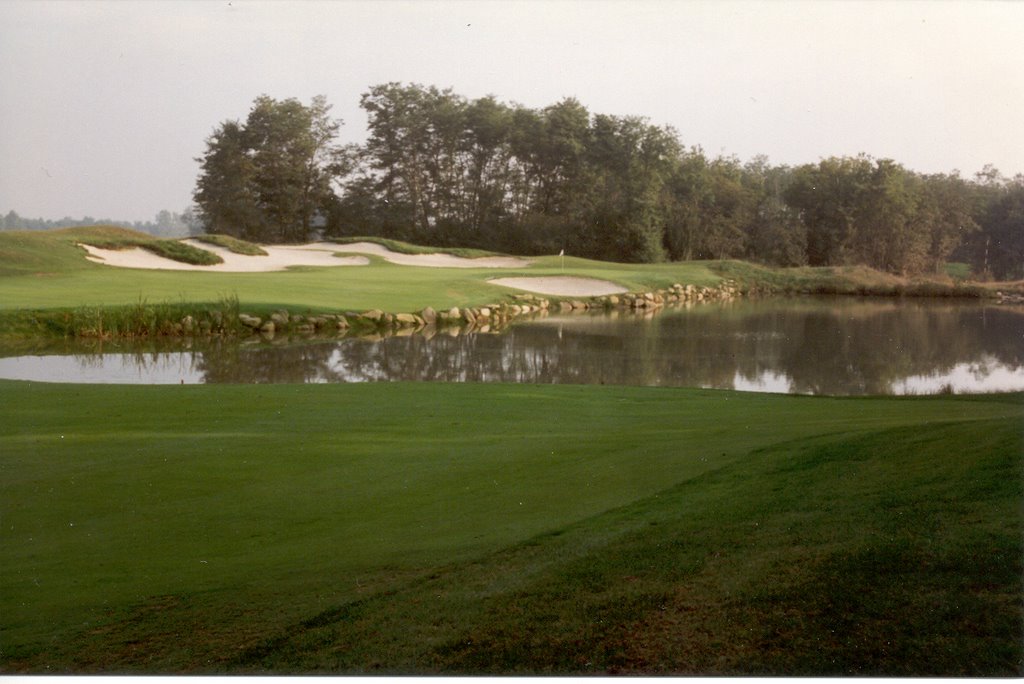
Hole #6 - Par 3

November 4, 2006 marked the opening of the first 9 holes at Anfi Tauro in Gran Canaria. This has been the most ambitious golf course project we have designed in Europe to date. It has been the longest - 10 years and counting....

Anfi Tauro is the brainchild of Norwegian industrialist Bjorn Lyng (who recently passed away). Like so many clients, Sr. Lyng was intellegent, creative and intuitive. The opportunity to work with him was truly an honor.


Javier Suarez (left) Anfi Tauro project manager and Sr. Lyng (center) founder of Anfi.

This is the second "Anfi" resort in Gran Canaria, Anfi Del Mar being the first resort. Anfi Tauro will eventually have 7,000 "beds" - which will be a combination of individual bungalows, apartments and hotels. There is also a new marina and commercial center planned.

Construction of the golf course has been a daunting experience, including moving more than 3,000,000 cubic meters of rock and sand. As an example: Hole #6 (shown above) is built on a plateau that was once a mountain (30 meters of rock was removed to provide views from within the resort - to the sea).

The construction process started with a Norwegian contractor (Jan Syltern). We have had several different superintendent and shaper changes over the years. It has been a real mix of talent, experience and personalities. Today, most of the construction crew is "in-house", with the exception of Dennis Tocquigny, who has previously worked several of our projects around the world. Dennis is a master golf course builder and superintendent. He brings dedication and expert talent to each project, critical to the construction process.

PHOTO: Dennis demonstrating how to properly operate a "sacho" - a uniquely Canarian "digging" tool or shovel. At first, we couldn't understand why we couldn't find a sacho with a longer handle, that would be more comfortable for the workers. The answer was: the short handle keeps the workers eyes pointed down - fewer distractions = more work. (Okay, but what about the workers backs?)

We deal with all the normal "island" issues related to sources supplies and equipment. On top of this, we are working with desalinated water for irrigation. Anfi started out as our first course with Paspalum (Salam and SeaIsle 2000) . We are still learning with this grass but I am optimistic about the possiblities/potential, especially under difficult (water) conditions such as Anfi. It is a "thatchy" grass and the stiff and upright growing habit provides good lie every time. The ball likely sits up too much for a purist and it may produce some "fliers". But, the average and beginning golfers will probably love this characteristic. The "thatchy" tendancy of this grass tends to recieve shots softly, not providing for much roll. This is a consideration, when changing grasses near the green. The ball tends to stop quickly in the Paspalum, where it will roll-out in the bentgrass. The "reaction differentiation" can be awkward and inequitable.

The putting surfaces are Bentgrass, which works well in this locale, since the evenings are fairly cool. The stress period is from June to the first of September, when temperatures are high in the afternoon. But, there is normally good air movement to counteract the heat, and humidity is relatively low most of the time.

Paspalum sprigging on hole #2

Meanwhile, construction continues on the 2nd - 9 holes, which is slated for completion next year. Above is a picture of the Paspalum sprigging process.

DANSK GOLF UNION

This article (below) comes from the DANSK GOLF UNION newsletter announcing the launch of the Lyngbygaard project in Denmark. This is one of two projects we were just commissioned to design. As I write this, we are making preparations to travel to Denmark to review the preliminary staking of these golf courses on site. The intention is to verify the location of each golf hole before we commence detailed design plans.

I will provide updates on these projects, which will be our first designs in Denmark. We are looking forward to the challenges of working within the strict envirionmental requirements in Denmark.


Flemming Vennekilde, Project Manager


Eksklusiv Århus-bane efter amerikansk konceptLyngbygaard Golf Center vest for Århus forventes færdigt i foråret 2009 efter investeringer på et halvt hundrede millioner.Af Jens Christensen, 24. november 2006

Efter godt fire års målrettet arbejde er investorerne bag det ambitiøse golfbaneprojekt Lyngbygaard Golf Center A/S nu klar til at realisere planerne. 108 hektar af den jord, der tilhører den østjyske herregård Lyngbygaard, skal blive til den første nye golfbane i Århus Kommune i 20 år. Området ligger smukt i skovkanten en lille kilometer vest for landsbyen Lyngby og kun godt 12 kilometer fra Rådhuspladsen i Århus. Projektet får en samlet anlægssum på 45-55 mio. kroner.

Anlægget, der forventes at være helt færdigt i maj 2009, kommer til at bestå af tre 9-hullers sløjfer. To 9-hullers sløjfer udgør mesterskabsbanen med par 72 og en samlet længde på godt 6.200 meter fra gul tee. Alle huller anlægges med fire teesteder. De sidste ni huller bliver en såkaldt »executive course,« som med par 34 og en længde på ca. 2.600 meter fra gul tee, bliver ideel for dem, der gerne vil nå ni huller efter fyraften.

Kvalitet i højsædet- Konceptet er taget fra USA, hvor man mange steder har ni huller, der er lidt kortere, og som giver mulighed for at spille en hurtigere runde. Det betyder ikke, at det bliver ni mindre gode huller. De får samme høje standard som de øvrige huller, siger Flemming Vennekilde, der sammen med de tre århusianske forretningsfolk og golfspillere, Peter Bohnsen, Lars Kjær og Uffe Jakobsen samt godsejer Niels Jørgen Bønløkke og Thomas Bjørn har skudt i alt 4,4 mio. kr. ind i aktieselskabet Lyngbygaard Golf Center A/S.

Flemming Vennekilde bliver direktør og daglig leder af selskabet. Han understreger, at kvalitet er et nøgleord i hele projektet:
- Med Lyngbygaard Golf Center er vi ikke i tvivl om, at vi får et produkt, der fuldt ud lever op til prisen - som måske ligger i den højere ende af skalaen - men som også afspejler kvaliteten. Vores holdning er klar: Danmark og i særdeleshed Århus-området har behov for en golfbane, hvor alle detaljer er gennemtænkte og af høj kvalitet. Det skal være et sted, hvor alle kunder -­ både klubbens medlemmer, green fee-spillere og virksomheder, der har firmaarrangementer - får en unik golfoplevelse. Hver gang.

Ud over de 27 huller, anlægges en drivingrange med alle faciliteter, og der bygges et nyt klubhus på 1.000 m2 i to plan. Her skal blandt andet indrettes omklædningsfaciliteter, proshop, café og en restaurant.

Members’ Lounge- Det skal ikke være en snobbet golfklub, men vi vil gerne gøre noget ekstra for de primære kunder, nemlig klubbens medlemmer. Derfor arbejder vi p.t. med planer om at skabe en slags »Members’ Lounge,« hvor klubbens medlemmer uforstyrret kan slappe af og nyde omgivelserne, siger Flemming Vennekilde.

Den endelige beslutning om at igangsætte projekteringen afhænger dog af, at der inden 15. december kan findes 300 B-aktionærer til projektet.

Vi har afholdt tre velbesøgte informationsmøder, hvor der var god interesse for projektet. De første tilmeldinger er allerede kommet. I første tegningsperiode, der løber frem til 15. december, udbyder vi 600 B-aktier, der hver giver spilleret for en person på banen. De første 300 aktier koster 35.000 kr. stykket, mens de efterfølgende koster 40.000 kr., fortæller Flemming Vennekilde.

Senere vil der bliver udbudt yderligere 600 aktier, som bliver solgt på markedsvilkår. Dog ikke under 40.000 kr. stykket. Alle medlemmer skal - ud over købet af en aktie - betale et årligt kontingent, som p.t. forventes at komme til at ligge på ca. 6.500 kr. om året.
Virksomheds-aktierLyngbygaard Golf Center er også i gang med at kontakte det østjyske erhvervsliv med et tilbud, der giver virksomheder mulighed for at købe aktier. Virksomhederne kan frit stille den tilknyttede spilleret til rådighed for en navngiven person ­ f.eks. en medarbejder, som er udstationeret i Århus for en længere periode, bestyrelsesmedlemmer eller indehaveren.

- Interessen for denne model har været stor, og mange ser det som en mulighed for at gøre de ansattes lønpakke mere attraktiv. Vi har også en erhvervsklub på tegnebrættet. Detaljerne er ikke helt på plads endnu, men det er klart, at vi med Thomas Bjørn som investor vil få nogle fordele, som meget få andre erhvervsklubber i Danmark kan matche, siger Flemming Vennekilde.

Ansvaret for banen er lagt i hænderne på det amerikanske golfbanearkitekt-firma von Hagge, der samarbejder med den danske kollega Michael T. Møller. Derudover bliver Thomas Bjørn meddesigner på anlægget. Von Hagge står bag en række kendte baner som Doral Golf & Country Club i Florida (kendt for The Blue Monster), La Costa Country Club i Californien og Bay Hill i Florida. Alle tre baner har i 2006 lagt jord til turneringer på den amerikanske PGA Tour.

Gode referencerRick Baril, der bliver chefdesigner på Lyngbygaard Golf Center A/S, har bl.a. haft ansvaret for projekteringen af Les Bordes i Frankrig, som af Peugeot Golf Guide er kåret til den næstbedste bane i Europa efter Valderrama i Spanien. Rick Baril er også manden bag Le National ved Paris, som husede Open de France i 2006, og Emporda ved Barcelona, som for nylig blev brugt til Europatourens kvalifikation.

I Europa bliver Lyngbygaard Golf Center sammen med et lignende projekt på Stensballegaard Gods ved Horsens Fjord von Hagges første golfbaneprojekt nord for Frankrig.
- For os er dette en enestående chance for at skabe et visitkort, som kan være med til at åbne døre til det nordeuropæiske marked. Selvom vi har gode referencer og et godt navn i branchen, bliver vi i alle nye markeder, vi går ind på, altid mødt med en skeptisk holdning, som går på, om vi nu også kan designe en golfbane til den specielle natur og de specielle forhold på dette sted. Derfor er Lyngbygård og Stensballegaard, der begge udgør fantastisk smukke og velegnede områder til anlæg af golfbaner, en test, hvor vi skal bevise, at vi kan lave golfbaner i høj kvalitet - også i Danmark, siger Rick Baril.
Mere information: http://www.lyngbygaardgolfcenter.dk/

White Witch revisited

17th at THE WHITE WITCH
Montego Bay, Jamaica


Just recieved this image of a painting of the 17th at The White Witch golf course in Jamaica, painted by Maggio.

The image brought back lots of memories. We knew the green site was going to be excellent, with the water in the background (although the painting doesn't accurately reflect the altitude of this green or the distance to the water).

I percieved the lone tree behind the green would be important to the composition. (Actually, it's a trash tree but the combination of wind shaping the top and cows eating the bottom branches, conspired to produce the unusual shape you see in the painting.) It was extremely difficult to convince the construction crew of it's importance. We made repeated requests to protect this tree with safety fencing. (Inevitably, we would find a dozer parked in the shade under the tree. It was a favored gathering place for the workers at lunch time.)

After several visits the tree was still not protected. So, I finally refused to continue a site visit and stood there until a fence was installed around the tree. The tree survived the construction process but I believe it was recently damaged during a storm. It will be interesting to see if they replace it.

There were two holes at the White Witch that defied logic - the 17th (shown above) and #7. When we were building the 17th green, I was convinced the green sloped excessively toward the tees. The shaper (Brad Dupuis) was adamant about the putting surface being relatively flat i.e. less than 2% slope. We deliberated this point over the course of two or three site visits until I made him prove it to me with a digital level. Brad was right, the green was very gentle. It still appears as an optical illusion to me today. I can't believe balls don't simply roll off the front of the green.

The 7th hole at the White Witch is an uphill par 4. These holes are always problematic as visibility (especially at a resort course) is an issue. As construction progressed on the 7th, we just weren't able to comprehend the limits of the putting surface. We wanted golfers to be able to understand the limits of the target. Finally, I asked Brad to measure the elevation change from the landing area to the green. (our base topography was suspect). Brad reported that it was an 18 meter rise in elevation. I was shocked. I also think I said unkind things about his abilities (among other things). I simply couldn't believe he could be right. When I found out he measured the elevation with a hand level, I believe I also may have taken the liberty of casting aspersions upon his ancestors and relatives. I told him to have a surveyor measure the elevation. Brad reported (in a taunting, knowing and casual manner) the elevation change was 18.25 meters! With a false front and some creative shaping near the back of the putting surface, we were able provide a good frame of reference for the putting surface. But, there was no way to a view of the putting surface. Playing this hole today, it's easy to percieve that it plays uphill but I doubt anyone would believe it is 18 meters uphill. (If you want to win some money, this would be a good bet.

I promised Brad I would never question his hand level skills again and I have kept that promise.

HAZARDS: The Heart and Soul of Golf

I have just returned from Europe and will try to update this blog with recent information. In the meantime, I will start with the following: This is an article written for Dunyasi Golf, a prominent golf magazine in Turkey. It is part of an ongoing series I was asked to write. The theme of these articles is "Understanding golf strategy from an Architect's perspective".

HAZARDS: The Heart and Soul of Golf

“Hazards – how well chosen the name!
They are risks; and penalties must come to those who take risks and fail.”
ROBERT HUNTER
Golden Age
Golf Architect


Our intention is to help improve your golf game (and lower your scores) by gaining a better understanding of golf courses and golf architecture. Instead of focusing on swing mechanics, we focus on golf strategies from an architectural perspective.
For an Architect, there is no element more important in defining strategy on a golf course than a “hazard”.

In golf, “hazards” can be defined as; any obstacle that affects the unobstructed play of a golf hole. This can include water, sand and grass bunkers, mounds, etc. Hazards are elements which have the potential to impose a penalty on a player. Consequently, many golfers mistakenly think architects use hazards to penalize players. In fact, architects use hazards to communicate the strategy of each golf hole.

Architects communicate strategy through hazards. Hazards are considered the heart and soul of golf strategy. These signals describe the tactical examination for the golfer. Being able to understand these signals is paramount, if a golfer wishes to improve.

To begin to understand the importance of hazards, consider what golf would be without hazards.
GOLF HOLE DIAGRAM 1
Diagram 1 (above) is a simple golf hole without hazards. Since there are not any obstacles to consider and negotiate, the strategy is simple; play straight toward the green. There is no particular strategy, other than distance. This golf hole is a test of strength or length, with no particular importance placed on strategy.
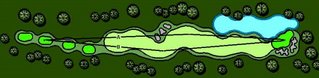
GOLF HOLE DIAGRAM 2
Diagram 2 (above) shows a golf hole with hazards. This golf hole possesses significantly more interest and strategy. Each hazard has meaning and conveys a portion of the intended message. The player needs to consider each hazard and the message it communicates. In this example line of play “A” encounters more risk, attempting to land over the bunkers, and is rewarded with a shorter and better approach angle to the green. Line of play “B” is a safer route, playing away from the bunkers but the approach to the green is longer and from a more difficult angle.
There are different philosophies related to the placement, style and severity of hazards. But, the consistent theme is: Hazards define the strategy of a golf hole. Hazards penalize golfers only when golfers misinterpret the strategy or poorly execute a golf shot.

Think of hazards as a conversation with the golf course or the golf course architect. The hazards provide information and you must comprehend the message each hazard imparts. However, it is important to understand the implication of each hazard may not be readily comprehensible. In fact, if the golf course is really good, the true strategy may require time and study before you truly understand the strategy. A superior tactical design demands sophisticated skills, in order to fully comprehend and appreciate strategy.

As you become adept at deciphering these messages, you will realize there is a hierarchy of hazard “intensity” and “influence”:

Hazard INTENSITY – refers to the visual character of hazards, which can be fantastically bold to slightly obscure. Bold and obvious hazards are used to provide a strong message. These types of hazards are typically used to indicate “line of play” in a very unmistakable manner. Obscure hazards impart a more subtle message and may require more intense study to discover and understand.

Hazard INFLUENCE – refers to the penalty potential of each hazard. For example, a water hazard inflicts a clearly defined and measurable penalty. On the other hand, a sand bunker imposes an unspecified penalty, the severity of which must be deliberated by the player.

If your intent is to truly improve your score, you must assess the intent of the hazards and plan your strategy, from your destination backward. This will be the most difficult mental adjustment you will need to make. Good golfers start assessing a golf hole by imagining the most advantageous position for approaching the green. Once they have established this point, they consider what they need to do to arrive at that point. In effect, they play the golf hole backwards in their mind to determine the line of play. This is the essence of good course management.


“Management - placing the ball in the right position for the next shot...is 80% of winning golf." Ben Hogan

Unfortunately, most golfers are inclined to only consider where it is safe to hit the next shot and do not consider the ramifications of the next shot. Consequently, they often find themselves in awkward positions, scrambling to produce extraordinary golf shots.

Next time you play golf, consider planning your strategy as you would any journey. Determine your starting point and destination. Then, consider the safest and most prudent route of travel – working backwards from your destination to the starting point. Calculate any risks (hazards) and determine how best to avoid these. You should find this approach to golf enjoyable and liberating. Most importantly, it is guaranteed to lower your score!


von HAGGE, SMELEK and BARIL

Houston, Texas 77070

281-376-8282